

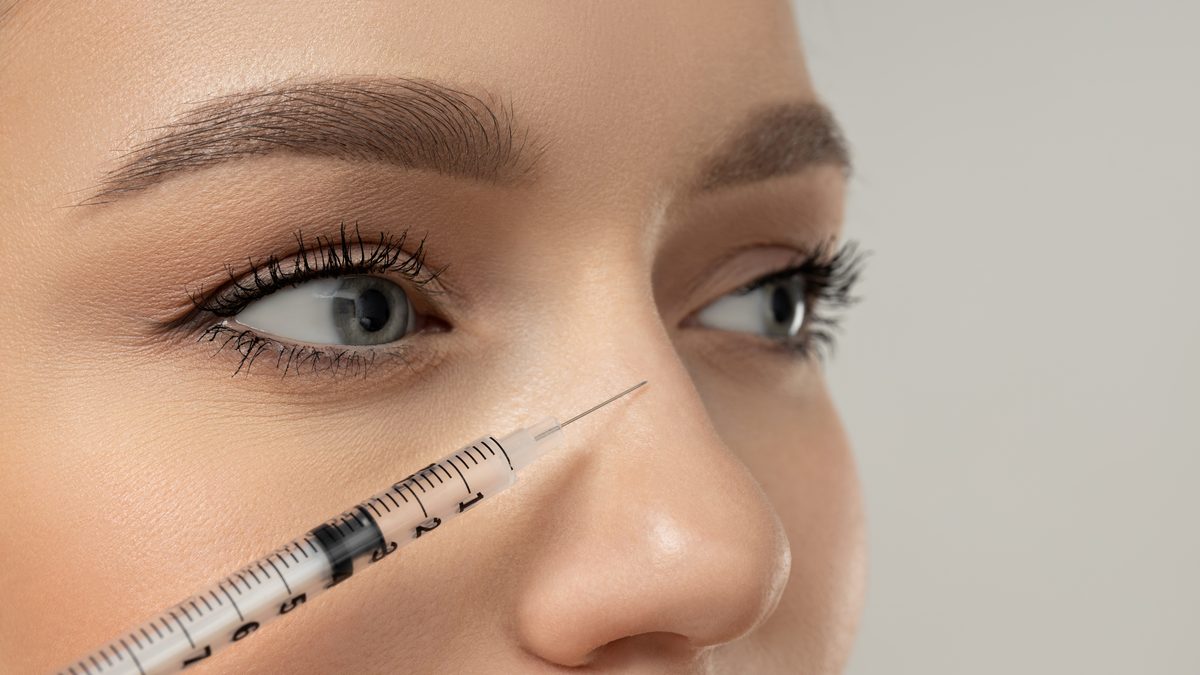
Nose Filler vs Rhinoplasty in Lisbon: Which Option Is Right for You?
If you want to change something about your nose but are not ready for surgery, nose filler may be the answer — or it may not. This guide compares the two approaches clinically: what each can change, who each suits, and how costs compare in Lisbon.
Nose filler and rhinoplasty are frequently compared, but they solve different problems with completely different methods. Understanding which serves your case begins with understanding what each one can — and cannot — change.
What is nose filler (liquid rhinoplasty)?
Nose filler — also called liquid rhinoplasty or non-surgical rhinoplasty — involves injecting hyaluronic acid gel into precise points on the nose to correct asymmetries, smooth the bridge, lift the tip, or disguise irregularities. It is a clinic procedure: no general anaesthesia, minimal downtime, immediate results.
The hyaluronic acid can be precisely shaped. Injected in small quantities at the right points, it creates the optical impression of a straighter nose, reduced bump, or more defined tip. The effect is fully reversible — it can be dissolved with hyaluronidase if the result is not as expected.
What is rhinoplasty?
Rhinoplasty is nose surgery performed under general anaesthesia that reshapes the bone and cartilage structure of the nose. It can reduce the size of the nose, remove a dorsal hump, correct a deviated septum, narrow the nostrils, or permanently alter the tip. Results are permanent.
When to choose nose filler
Nose filler suits people who want a subtle aesthetic adjustment at low risk. The most appropriate candidates include people with:
- A small-to-medium dorsal hump they want to smooth in profile (the hump does not disappear — filling above and below creates the visual impression of a straighter bridge)
- A slightly drooping tip that can be lifted with hyaluronic acid at the columella or tip base
- Subtle asymmetries between the two sides of the nose that disrupt facial harmony
- Post-rhinoplasty irregularities — small imperfections or residual unevenness after surgical healing
- A wish to preview a change before committing to surgery
The limitations must be clear before deciding. Nose filler is not appropriate for people seeking overall volume reduction, septal correction with breathing impact, nasal narrowing, or in cases where nasal vascular anatomy presents elevated injection risk.
When to choose rhinoplasty
Rhinoplasty is the right choice when the objective exceeds what hyaluronic acid filler can achieve. Typical candidates want:
- Actual size reduction of the nose — which requires removal of bone or cartilage tissue
- Correction of a deviated nasal septum affecting breathing (rhinoseptoplasty)
- Removal of a pronounced bony hump that cannot be adequately camouflaged with filler
- Narrowing of wide nostrils (alarplasty)
- Correction of significant structural asymmetries, including post-trauma sequelae
- Permanent, definitive change to the shape of the nose without ongoing maintenance
Surgery requires full pre-operative assessment including blood work, anaesthesia consultation and detailed surgical planning. Active recovery is approximately two weeks, but the final result takes six months to a year to fully manifest.
Nose filler cost in Lisbon
At Cosmo Clinic in Lisbon, nose filler with Stylage XXL Nose 1 ml is priced at €368 per session. This reflects the product used — Stylage XXL Nose is a formulation purpose-built for nasal remodelling, with high cohesivity and structural support, distinct from products used for lip or under-eye filler.
For comparison, nose filler in the UK typically ranges from £400–£700 per session, and in the US from $500–$800 or more depending on location and practitioner. Lisbon pricing reflects Portugal's cost structure while using the same European-standard medical-grade products.
Set against surgical rhinoplasty — which in Portugal typically costs between €2,500 and €6,000 or more, plus anaesthesia, operating room and post-operative care — nose filler over two to three years of periodic maintenance still represents a lower total investment, with substantially lower risk and zero downtime.
What to expect at Cosmo Clinic Lisbon
At Cosmo Clinic, nose filler is performed by medical doctors with specific training in facial fillers and in-depth knowledge of nasal vascular anatomy. The nasal zone requires a different technical approach to most other filler areas — the proximity of arterial vessels with direct anastomoses to the ocular circulation makes injection technique a non-negotiable factor.
The team is English-speaking and regularly treats international patients and Lisbon expats. A pre-treatment consultation assesses your anatomy, discusses expectations and confirms suitability before any product is used.
The session takes approximately 30 minutes. After application of topical anaesthetic cream, the doctor performs injections at specific anatomical points, shaping the product progressively. Results are visible immediately. In the first one to two days, mild localised swelling and occasional redness are normal, resolving within 24 to 48 hours. For the first 48 hours: avoid direct pressure on the nose, do not wear glasses that rest on the bridge, avoid extreme heat and strenuous exercise on the day of treatment. A two-week follow-up allows assessment of the final result.
Frequently asked questions
Does nose filler hurt?
The procedure is performed with topical anaesthetic cream. Most patients describe light pressure rather than pain. The session takes about 30 minutes.
Can nose filler replace rhinoplasty?
In selected cases, yes — when the goal is a cosmetic adjustment rather than structural correction. For size reduction or septal deviation, rhinoplasty is the only appropriate option.
Is nose filler safe?
When performed by an experienced medical doctor it is a safe procedure. The nose has a complex vascular anatomy, so practitioner experience matters significantly — always choose a licensed physician.
How long does the effect last?
12 to 18 months for most patients. Annual maintenance maintains the result.
Does nose filler dissolve on its own?
Yes. Hyaluronic acid is naturally metabolised by the body over 12 to 18 months. If you want to reverse the result before that, hyaluronidase dissolves the product immediately in a medical appointment.
Can I get nose filler after rhinoplasty?
Yes. Nose filler is frequently used for post-surgical refinement — for example, to smooth a small residual irregularity after full healing. Suitability depends on time elapsed since surgery and tissue characteristics. A medical assessment is required.
Will nose filler make my nose smaller?
No. Hyaluronic acid adds volume rather than removing it. What nose filler achieves is an optical illusion of better proportion and symmetry — smoothing a dorsal hump makes the nose look more even in profile, though the total volume increases very slightly.
Learn more about nose filler treatment at Cosmo Clinic Lisbon.