


Forehead Botox: How Long It Lasts and What to Expect
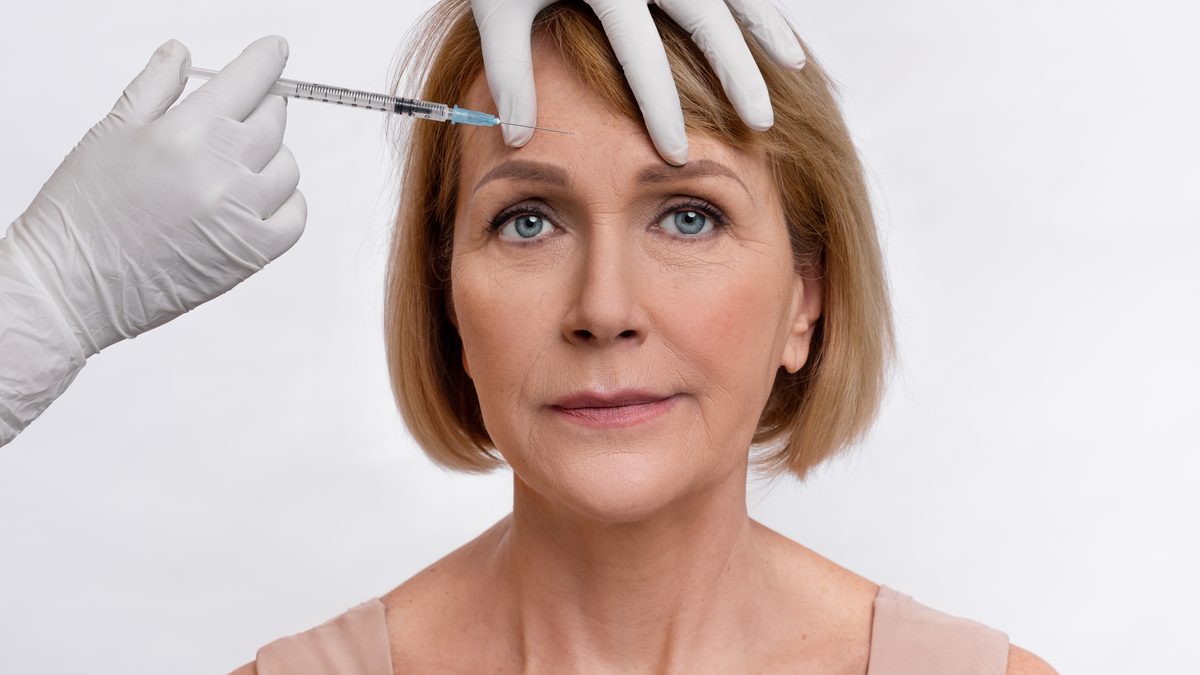
Clinical guide to the real duration of forehead botox, what happens in the session, recovery, and when to repeat treatment.
Cosmo Clinic Editorial — — 8 min read
Forehead botox is one of the most common aesthetic treatments — and one of the most misunderstood. The most frequent questions patients bring to consultation are not about mechanism but about outcomes: how long will it last? and what will it look like? This guide answers both, based on clinical practice.
How forehead botox works
Horizontal forehead lines form from repeated contraction of the frontalis muscle — the muscle that raises the eyebrows. Over years, this constant movement creates progressively deeper creases in the skin.
Botulinum toxin temporarily blocks the nerve signal to that muscle. The muscle relaxes, the skin is folded less intensely, and the lines soften. The effect is temporary — the nerve gradually regenerates and treatment needs to be repeated.
Important: forehead botox addresses dynamic expression lines (those that form with movement). Deep static lines already present at rest may soften but not disappear completely — response depends on depth and skin quality.
How long does it last?
Between 3 and 5 months — that is the realistic window. Individual variation depends on three main factors:
- Metabolism: people with faster metabolisms clear the product sooner. Regular intense exercise can shorten duration.
- Dose: more conservative doses — preserving more movement — tend to wear off faster than fuller doses. It is a trade-off between naturalness and longevity.
- Treatment frequency: with regular sessions over time, many patients see progressively longer duration as the muscle adapts to reduced activity.
On a first treatment, 3 months is common. By the second or third session, many patients reach 4–5 months.
What happens in the session
The consultation begins with an assessment of forehead dynamics — how the muscle moves, line distribution, brow position, and your aesthetic goals. This determines injection points and dose.
Injections are made with a fine needle, usually without anaesthetic. Four to six points across the forehead, taking 10–15 minutes total. You may feel a brief sting at each point — minimal and transient.
Small bumps may appear at injection sites immediately after — these resolve within 20–30 minutes. Bruising is possible but uncommon with good technique.
When you see results
Results begin appearing 3–5 days after treatment. The forehead gradually relaxes — results do not appear the moment you leave the clinic. Full effect stabilises at 10–14 days.
At Cosmo Clinic, a two-week follow-up is standard. If any small adjustment is needed — an additional point in an area that remained more active — it is made at this appointment.
Recovery: what to avoid
Minimal downtime. You can return to work immediately. Post-treatment guidance:
- First 4 hours: do not lie down, do not rub the treated area, avoid intense exercise.
- First 24 hours: avoid sauna, very hot baths, alcohol, and intense sun exposure.
- First week: daily SPF whenever exposed to sun.
Will it look natural?
That depends on dose and technique. Forehead botox carries a specific risk: if overdone or points are poorly placed, the brows can drop, creating a heavy appearance. Cosmo Clinic uses a conservative approach — preserving expression and natural mobility while softening lines.
An appropriate dose reduces contraction intensity without eliminating movement. The forehead looks smoother but the face remains expressive. If you prefer a fuller result, this can be adjusted progressively — it is always easier to add than to correct an excess.
How often to repeat
Most patients repeat every 4–5 months. The ideal timing is at the first sign of returning movement — usually before lines become visible at rest again.
With regular treatment over 1–2 years, many patients space sessions to 5–6 months as the muscle progressively adapts.
Forehead Botox · Lisbon
Book a consultation at Cosmo Clinic
Consultations in English. Conservative approach. Natural results.
Frequently asked questions
Free resource
Guide to your first aesthetic medicine consultation in Lisbon
10 questions worth asking, vocabulary to know, and signs of a trustworthy clinic. Free.
Download freeHow long does forehead botox last?
3–5 months. First treatment often 3 months; with regular sessions many reach 4–5 months.
When will I see results?
3–5 days post-treatment. Full effect at 10–14 days.
Is there downtime?
None. Return to normal activity immediately. Avoid lying down, rubbing the area, and intense exercise for 4 hours.
How often to repeat?
Every 4–5 months. With regular sessions, many patients reach 5–6 months over time.
What should I expect at my two-week Botox review?
At the two-week review, your doctor assesses the symmetry of the result, whether the brow position is optimal, and if any residual movement in the treated area would benefit from a small complementary dose. This review is standard practice and is typically included in the treatment fee.
Can forehead Botox cause brow drooping?
Yes. The frontalis muscle is the primary brow elevator, and excessive relaxation can cause the brow to drop. This is why skilled practitioners approach forehead treatment cautiously — particularly in patients with naturally lower brows or upper eyelid heaviness. A conservative first dose with review is the safest approach.
Will I still be able to raise my eyebrows after forehead Botox?
At appropriate doses, forehead Botulinum toxin reduces but does not eliminate the ability to raise the brows. The goal is softened horizontal lines during expression, not complete immobility. Full elimination of forehead movement requires doses that carry a higher risk of brow ptosis.
Is it better to treat the forehead and glabella together?
In most cases, yes. The forehead and glabella muscles work antagonistically — relaxing the forehead without addressing the glabella can result in an unusually arched or heavy brow. Treating both areas together allows the practitioner to balance the result and achieve a harmonious, natural appearance.