



Botox: The Complete Guide for First-Timers
Everything you should know before your first Botox treatment, which areas it addresses, when to start, what happens on the day, and what to avoid. No hype, no jargon.
If you're considering Botox for the first time, this is probably the most important research you'll do before booking a consultation. Botox is not a product, it is a medical tool that requires precise anatomical knowledge. Who applies it and how they apply it matters far more than the brand of toxin.
This guide covers everything we discuss and answer in the initial consultation at Cosmo Clinic: exactly what botulinum toxin is, how it works on the face, which areas we treat, when to start, what to expect on the day, how much it costs, and importantly, when Botox is NOT the answer.
What botulinum toxin actually is
Botulinum toxin is a purified protein produced by the bacterium Clostridium botulinum. In minute doses and controlled application, it temporarily blocks the signal between the nerve and the muscle, relaxing it. When the muscle is relaxed, the skin above it smooths, dynamic wrinkles stop forming.
The most widely used brands approved for aesthetic use in Portugal are Botox® (Allergan), Azzalure® (Galderma), and Bocouture® (Merz). All share the same mechanism; differences lie in purification and onset speed. The quality of your result depends 90% on the doctor's technique, not the brand.
Botox does not erase wrinkles. It relaxes the muscle that creates them. It is a preventive treatment at the source of the problem, not a surface corrector.
Which facial areas we treat
Botox treats dynamic wrinkles, those caused by facial muscle movement. Deep static wrinkles (etched in even at rest, like nasolabial folds) require hyaluronic acid filler rather than toxin. We frequently combine both.
The most requested areas:
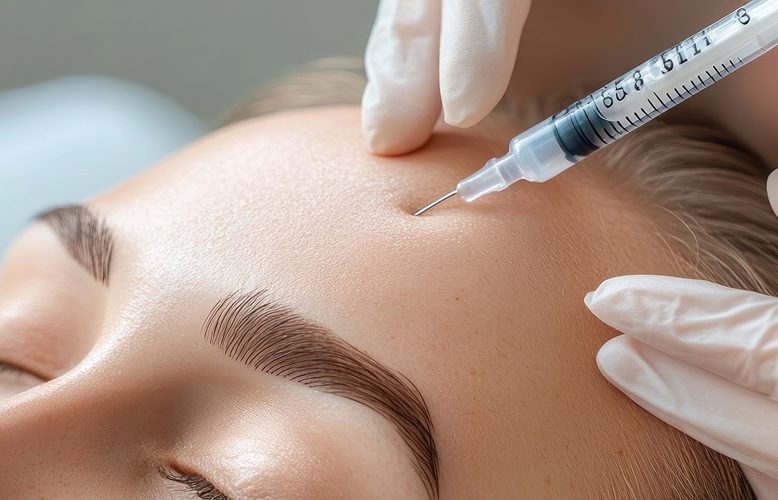
- Forehead Botox, horizontal lines that appear when you raise your brows. Careful dosing prevents the heavy-brow effect.
- Frown lines (glabella), the famous "11s" or worry lines between the brows. The most treated area worldwide.
- Crow's feet, lines at the outer corners of the eyes that appear when smiling or squinting.
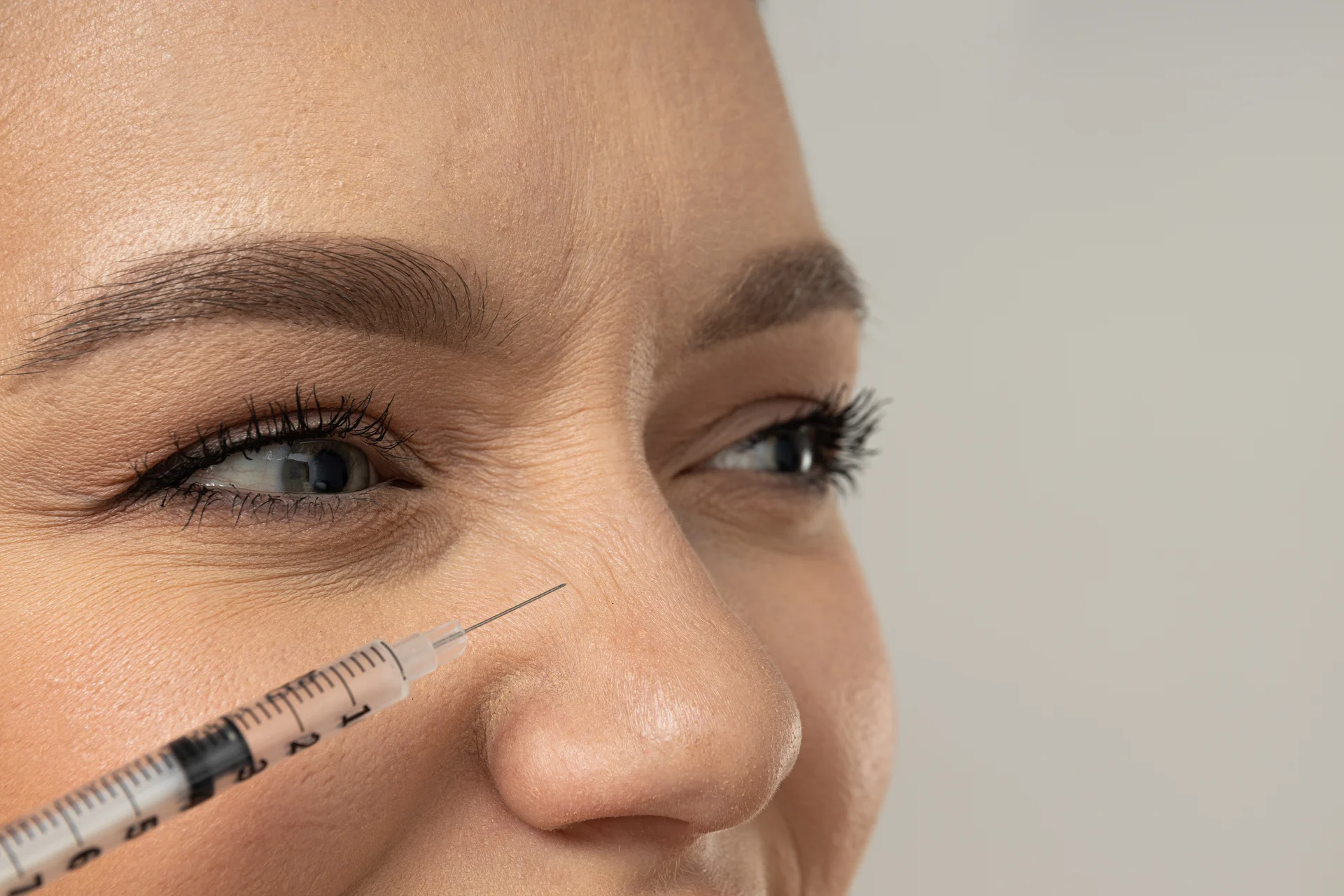
- Bunny lines, diagonal lines on the sides of the nose when you smile.
- Nose tip lift, relaxes the muscle that pulls the tip downward.
- Gummy smile, lowers the upper lip when smiling to reduce excess gum display.
- Chin Botox, softens "orange peel" texture and relaxes chin projection.
- Lip flip, makes the upper lip curl slightly outward for definition without filler.
- Hyperhidrosis, excessive sweating in the underarms, hands, or feet. A medical rather than aesthetic indication.
When to start: prevention vs correction
There is no magic age. There is one question: are your dynamic wrinkles leaving permanent marks that stay visible even at rest?
- 20–25 years: rarely necessary. Skin recovers fully between movements. Exception: patients with very active forehead muscles or intense expressiveness.
- 25–30 years: typical preventive age. Small doses (baby Botox) on the glabella and forehead prevent lines from settling in. Treatment 1–2× per year.
- 30–40 years: ideal time to start a regular plan. Wrinkles are still reversible. 2–3 treatments per year keep skin "paused".
- 40+ years: Botox remains effective but works alongside fillers, skin boosters, and collagen stimulators. Combined approaches deliver the most natural results.
Starting early with small doses is better than starting late with large ones. Prevention costs less than correction, in money and in naturalness of result.
Who should NOT have Botox
Absolute contraindications:
- Pregnancy and breastfeeding
- Neuromuscular disorders (myasthenia gravis, ALS, Lambert-Eaton syndrome)
- Known allergy to human albumin or other formulation components
- Active infection at the injection site
- Current use of aminoglycosides or other antibiotics that potentiate toxin action
Relative contraindications (assessed case by case):
- Unrealistic expectations ("I want to look 20 again")
- Body dysmorphic disorder
- Important events within the next 10 days (risk of result not yet stabilised)
What to expect: before, during, after
Initial consultation (free)
We assess your facial movement, identify overactive muscles, and map injection points photographically. We discuss your goals, "I want softening but to keep my expression" has a different plan to "I want maximum relaxation". We confirm the absence of contraindications.
Treatment day (15–30 minutes)
Skin cleansing, optional topical anaesthetic or ice application. Toxin is injected with a 30G needle (virtually painless) at multiple points per area. Each injection lasts 1–2 seconds. Minimal downtime, you leave and return to normal activities immediately.
First 24 hours
- Avoid lying down for the first 4 hours
- Do not massage or apply pressure to treated areas
- No intense exercise, saunas, or extreme heat that day
- Ideally no alcohol for 24h (reduces bruising risk)
- Keep your head upright, avoid face-down positions
Days 3–7: the effect begins
First signs of muscle relaxation appear. You may notice a slight sensation of heaviness or stiffness in the area, completely normal, it fades as the toxin distributes.
Day 14: final result
The toxin has reached maximum effect. This is when we schedule the review, the small percentage of cases that need a touch-up (0–2 additional units) are handled here. This review is always included at no extra cost.
Side effects: what's normal and what isn't
Normal (resolve in 1–3 days):
- Mild redness at injection points
- Small bruise (in around 20% of cases)
- Sensation of heaviness or stiffness in the area
- Mild headache in the first 24h
Contact your doctor immediately if you notice:
- Eyelid drooping (ptosis), very rare, manageable with specific eye drops
- Marked asymmetry more than 14 days after treatment
- Difficulty closing your eyes or smiling
- Allergic reaction (generalised swelling, severe itching)
Myths and facts
- "Botox accumulates in the body." ❌ False. It is metabolised and eliminated within 3–4 months.
- "Once I start, I can never stop." ❌ False. If you stop treatments, the effect fades and skin returns to its previous state (which may have aged in the meantime).
- "Botox gives you a frozen face." ⚠️ Only with poor technique or overdosage. With correct application, all expression is preserved.
- "Botox treats migraines." ✅ True. A specific injection protocol (different from aesthetic use) is EMA-approved for chronic migraine.
- "Men get Botox too." ✅ True. Around 20% of our Botox patients are men, dosing and injection points differ to preserve masculine anatomy.
The first consultation is the most important step
Botox is one of the safest and most predictable aesthetic treatments available, when applied by a doctor with specific training, using certified product, at doses appropriate to your anatomy. The quality of your result depends almost entirely on what happens before the first needle: the assessment, the plan, the aligned expectations. If you still have doubts about safety or long-term effects, our botox myths and facts guide answers the 7 most common concerns with clinical evidence. If you are thinking about starting preventive botox, read our guide on preventive botox: when to start.
At Cosmo Clinic, the initial consultation is always free and without commitment. If after the assessment we decide together that Botox is not the best option for you right now, we say so. There is no pressure to proceed with treatment. That is the difference between a medical clinic and a sales agenda.