


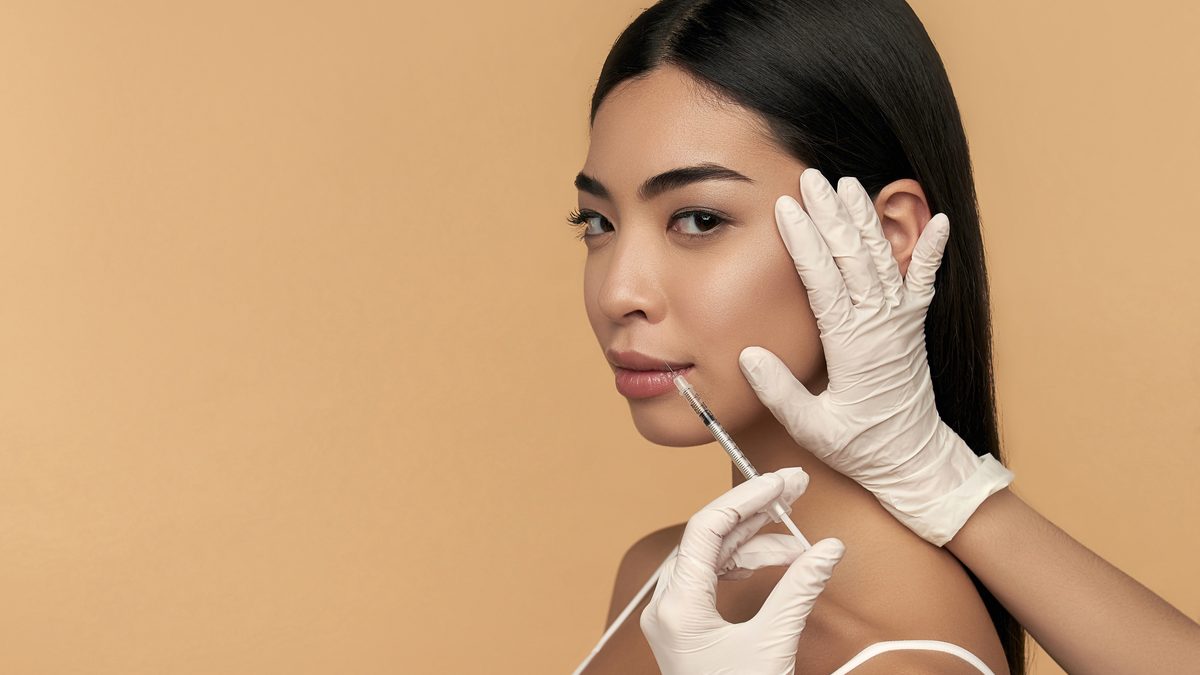
Does Botox Look Natural? How to Avoid the Frozen Face
The fear of looking "done" is legitimate — there are plenty of visible examples. But the artificial look is not a property of botox. It is a consequence of the wrong dose, the wrong injection points, or the wrong doctor. This article explains the mechanism and what separates a result that goes unnoticed from one that does not.
Most people who search "does botox look natural" are evaluating the treatment for the first time. The concern is reasonable: there are faces with botox that are obvious from across the room, and that puts off people who might genuinely benefit. What most don't know is that the artificial look is not caused by botox itself — it is caused by how much botox is used and where it is injected.
This article explains what botox does clinically (not in marketing language), why the artificial effect happens, and what distinguishes it from a result that preserves expression. For a broader introduction to the treatment, see our complete botox guide for first-timers.
What botox actually does, clinically
Botulinum toxin type A — sold under names including Botox® (Allergan), Azzalure® (Galderma), and Bocouture® (Merz) — blocks the release of acetylcholine at the neuromuscular junction. In plain terms: it prevents the nerve signal from reaching the muscle. The muscle does not contract because it does not receive the instruction to do so.
What happens next depends on two variables: the dose and the target muscle. The dose determines the degree of relaxation — from partial to complete. The target muscle determines which movement is attenuated or eliminated.
A muscle treated with the appropriate dose and correctly selected will relax partially, softening expression lines without eliminating movement. A muscle overtreated, or one that should not have been the primary target, produces what we call the frozen face: smooth, motionless skin that is disconnected from the rest of the face.
Why botox looks artificial: the three real causes
1. Excessive dose for the patient's anatomy
Each muscle has a different contraction strength, and that strength varies between individuals. The frontalis (forehead muscle) of someone with deep lines is stronger than the frontalis of someone with fine lines. Applying the same dose to both produces entirely different results: appropriate for one, excessive for the other.
An experienced doctor evaluates muscle strength before injecting — asking the patient to raise their eyebrows, furrow their brow, squint — and calibrates the dose to that assessment. A doctor without this training applies standard doses without individual calibration. This is where the artificial look begins.
2. Incorrect injection points
The human face has dozens of muscles working in coordination. Relaxing one muscle without accounting for its antagonists and synergists causes the untreated muscles to compensate — producing asymmetry or involuntary expressions. The "Spock brow" (exaggerated lift of the outer eyebrow) is the most common example: it results from incorrect injection points in the frontalis that leave the lateral portion of the muscle free to contract while the central portion is blocked.
The exact position of injection points within each muscle also matters. A few millimetres can determine whether the result is subtle or affects adjacent muscles.
3. Treating muscles in isolation rather than as a system
The face functions as a system. Relaxing the forehead without considering what happens to the eye area and brows means treating one muscle in isolation within an interdependent network. A doctor with facial anatomy training plans treatment by considering the whole — not each area separately.
Artificial botox and natural botox use the same product. What separates them is the dose and the decision of where to inject — two variables that depend entirely on the injecting doctor.
What a natural result looks like, clinically
Natural does not mean no effect. A natural botox result has identifiable characteristics:
- Dynamic expression lines (those that appear when the face moves) are softened or absent when the muscle is at rest.
- Movement exists — reduced in amplitude, but present. The patient can raise their eyebrows, furrow their brow, and smile with their habitual lines.
- No new asymmetry: the face moves in a coordinated way, without areas that remain static while others move.
- The resting expression does not look different from the person's normal expression — it simply looks more rested, without the lines that dynamic expression has engraved in the skin over years.
This result is achievable for most patients. It is not a matter of luck — it is a matter of dose and medical training.
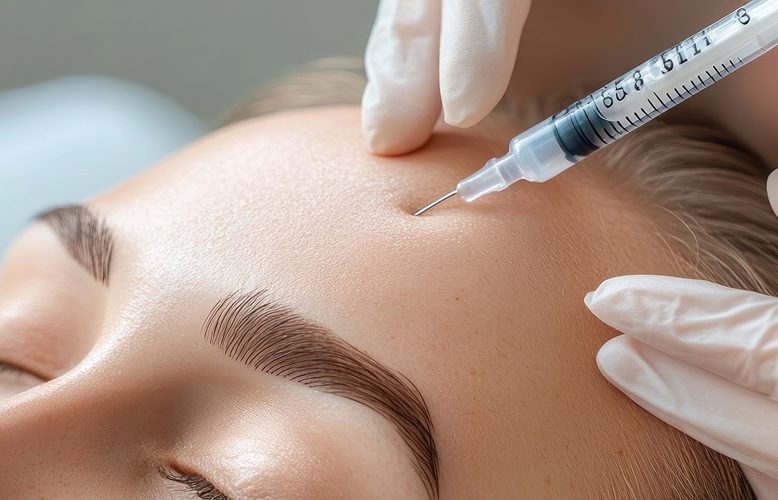
How dose determines the result
Botulinum toxin has a predictable dose-response relationship within known limits. Three clinical approaches exist:
- Conservative dose (subtle result): partial relaxation, movement reduced but present, lines softened without disappearing. Right for first-timers or anyone who prioritises naturalness. Lasts approximately 2.5–3 months.
- Standard dose (balanced result): significant relaxation in most patients, expression lines substantially reduced at rest, movement preserved with reduced amplitude. Lasts 3–4 months.
- Maximum dose (maximum effect): near-complete relaxation, lines eliminated, very limited movement. Appropriate for specific indications such as hyperhidrosis or bruxism — rarely the preferred approach for facial aesthetics. Lasts 4–5 months.
For anyone concerned about the artificial look, starting with a conservative dose and reviewing at 14 days is the correct approach. If the reduction is insufficient, it can be completed at the same reassessment appointment — at no additional cost in a reputable clinic.
Free initial consultation
Anatomical assessment, discussion of expectations, personalised treatment plan — no commitment.
Choosing a doctor for a natural result in Lisbon
The choice of doctor is the variable with the greatest impact on outcome. Not the product — all approved products perform similarly when used correctly. What matters is anatomical training, experience in muscle assessment, and honesty about what is achievable for each individual face.
What to look for and ask before deciding:
- Does the doctor assess the face in motion? A doctor who only examines the face at rest does not have sufficient information to plan treatment. Assessment must include active expressions.
- Does the doctor ask what you want to avoid? A conversation about expectations before injection is non-negotiable. If the doctor does not ask what concerns you, they have no way to calibrate the result.
- Is a 14-day review included? The final result of botox is only assessable two weeks after injection, when the effect has reached its peak. A reputable clinic includes this appointment at no additional cost.
- Does the doctor accept starting with a conservative dose? Any experienced clinician knows the approach of low dose, review, and complement if needed. Resistance to this approach is a warning sign.
In Portugal, botulinum toxin application is a medical act — only registered doctors have legal authority and adequate training to perform it. Verify that any clinic you consider is registered with the ERS health regulator at ers.pt.
Questions to ask before treatment
- Which muscle or muscles will be treated, and why those rather than others?
- What dose is planned for my anatomy?
- Is a conservative dose protocol available for a first treatment?
- If I am not satisfied with the result, what are the options? Is a review included in the price?
- What is the protocol if there is asymmetry?
A doctor who answers these questions precisely and without hesitation has adequate training and respect for the patient's decision-making process.
Conclusion
Botox does not look artificial by nature. It looks artificial when the dose exceeds what the patient's anatomy requires, when injection points do not respect facial physiology, or when the doctor lacks the training to assess the face as a whole before acting on its parts. None of these problems is inherent to the product — all are preventable with the right combination of medical training, individualised assessment, and clear communication of expectations.
At Cosmo Clinic, the initial consultation is free and includes movement-based facial assessment, discussion of expectations, and a personalised dose plan. Learn more about our botox treatments or specific areas such as forehead botox.