
Skin · 4 min read
Skin booster or mesotherapy: which one is for your skin
They sound the same and are not. One hydrates the dermis for months; the other feeds and corrects in short sessions. What differs in ingredients, depth, sessions and price, and how to choose with your skin in front of us.
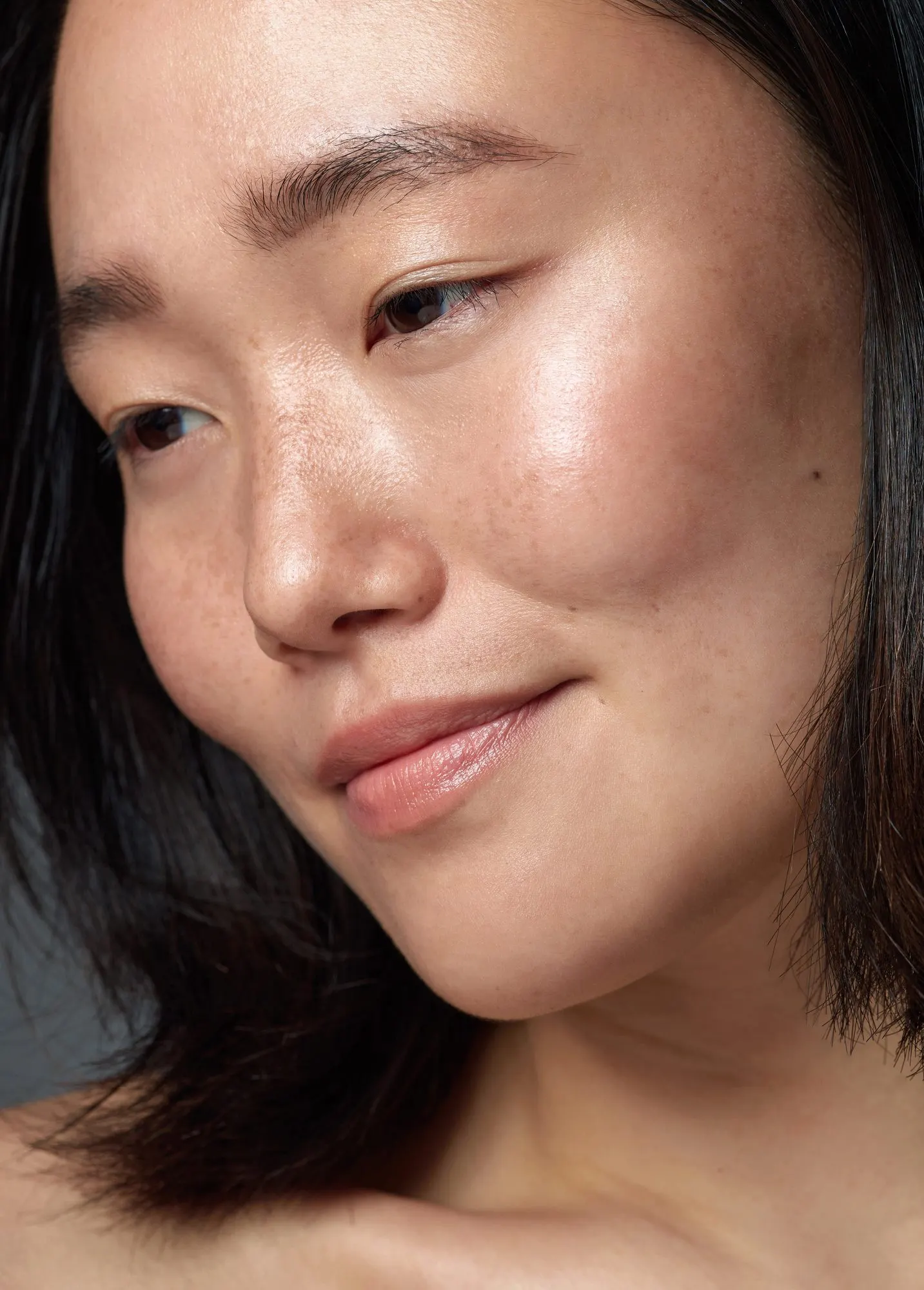
The question comes in almost every week, in the same words: "so which is better, a skin booster or mesotherapy?". There is no better. There is the right one for each skin, each routine and each goal.
Injectable deep hydration has become one of the most requested things in aesthetic medicine, and confusion came with it: skin boosters, mesotherapy, biorevitalisation, vitamin cocktails. Many people arrive at the consultation with a treatment picked by name, without knowing what it does. This guide explains what separates a skin booster from a session of NCTF mesotherapy, in ingredients, depth, duration and price.
What a skin booster is
A skin booster is stabilised, lightly cross-linked hyaluronic acid injected into the dermis. The same hyaluronic acid as in fillers, with a different structure: more fluid, less cohesive. It creates no volume. It hydrates, improves elasticity and quietly stimulates type I and III collagen.
It goes into the mid-dermis, 2 to 3 millimetres down, with a fine needle or cannula, at a few points per side. The product stays for months, absorbing water and drawing it into the surrounding tissue. The result is not same-day: the skin improves over weeks.
A skin booster does not shape the face. It changes the quality of the skin: how it catches light, how it ages, how it reacts to tiredness.
What mesotherapy is, and why it is different
Mesotherapy is an older and more versatile technique. It consists of many shallow micro-injections, 1 to 2 millimetres down, of a cocktail of active ingredients. In the NCTF we use: vitamin C, B vitamins, free hyaluronic acid, collagen-precursor amino acids, zinc, selenium, coenzyme Q10.
The difference is what goes in and where. The skin booster holds water for months. Mesotherapy feeds and corrects: tired skin, skin exposed to sun, smoking, stress or hormonal shifts, and preparation or maintenance between bigger treatments.
The comparison, concretely
| Skin booster | NCTF mesotherapy | |
|---|---|---|
| Main ingredient | Stabilised hyaluronic acid | Vitamins, amino acids, free hyaluronic acid, antioxidants |
| Mechanism | Deep hydration and collagen stimulation | Skin nutrition and microcirculation |
| Depth | Mid-dermis, 2 to 3 mm | Papillary dermis, 1 to 2 mm |
| Initial sessions | 2 to 3, 4 weeks apart | 3 to 4, 2 to 4 weeks apart |
| Duration | 6 to 9 months | 3 to 4 months |
| Downtime | Pinprick marks for a few hours | Micro-puncture marks for 6 to 12 hours |
| At Cosmo Clinic | €550 per session (3 ml) | €189 per session; pack of 3 for €499 |
Four profiles, four answers
Very dry skin, a tight feeling, dehydration lines visible even with cream. Skin booster. The hyaluronic acid stays in the dermis for months and brings water to the tissue. It is the base for chronic dehydration.
Tired skin, dull tone, a demanding routine: smoking, short nights, travel, a lot of sun. Mesotherapy. The antioxidant cocktail works on oxidative stress; a quarterly session protects the skin's light.
First time with injectables, wanting a natural, predictable result. Skin booster. A short course, a progressive result, no change of shape.
Regular maintenance without a high figure at every visit. Mesotherapy. A lower price per session, a cocktail adjusted to the season and the skin.
Many people do not choose just one. They use the skin booster as the base at the start of the year and mesotherapy as quarterly maintenance. On skin past 35, it is the plan we see work most consistently.
What the session is like
Both start the same way: cleansing and numbing cream for 20 to 25 minutes.
With a skin booster the product goes into a few defined points, in larger amounts per injection: 10 to 20 pricks, 15 to 25 minutes. With mesotherapy the coverage is total: 40 to 80 micro-injections across the face, and the neck or décolletage if included, a shower of small pinpricks. Ten to twenty minutes.
Afterwards, with both, the skin is flushed for a few hours, with pinprick marks that fade within 4 to 12 hours. No make-up for the first 6 hours, no intense exercise or direct sun that day, no sauna or pool for the next 48 hours.
What neither of them does
They add no volume. They do not lift cheekbones, shape jawlines or enlarge lips; for that there is filler. They do not relax muscles or soften expression lines; for that there is botulinum toxin. And they do not replace sunscreen or a retinoid: they complement the daily routine, they do not excuse it.
If someone offers you a skin booster "to lift the face" or botulinum toxin "to hydrate", you are at the wrong clinic.
How we decide with you
At Cosmo Clinic we start by looking at the skin: hydration, elasticity, water retention, history and, where it helps, photographs under standard light to compare later. From there, three rules. Less in the first year, adjusted to the skin's response. Combine in phases, never stack in one session. And the right product for the right skin: the skin booster and NCTF are not interchangeable.
The assessment consultation is free. It gets you from "which is better" to "what changes, for you". We would rather have that conversation with your skin in front of us.
Frequently asked questions
Short answers to the questions we hear every day. Everything else belongs in the consultation.
What is the difference between a skin booster and mesotherapy?
A skin booster is stabilised hyaluronic acid injected into the mid-dermis, where it hydrates and stimulates collagen for months. NCTF mesotherapy is a cocktail of vitamins, amino acids and free hyaluronic acid, in shallower micro-injections, that feeds the skin and corrects texture and tone.
Which is better for very dry skin?
The skin booster. Stabilised hyaluronic acid stays in the dermis for up to 9 months and draws water into the tissue. Mesotherapy helps, but does not hold water for as long.
How many mesotherapy sessions do I need?
Three to four to start, 2 to 4 weeks apart, then one every 3 to 6 months. A skin booster takes 2 to 3 sessions 4 weeks apart, then maintenance every six months.
How much does it cost?
At Cosmo Clinic, the skin booster (3 ml) costs €550 per session and NCTF mesotherapy €189. A pack of 3 NCTF sessions costs €499. The assessment consultation is free.
Do they add volume?
No. Neither is a filler. They do not change the contour of the face. They hydrate, revitalise and improve skin quality.
Is there downtime?
Almost none. Mild redness and pinprick marks for 4 to 12 hours. No make-up for the first 6 hours, no direct sun that day, no sauna or pool for the next 48 hours.
Can I do both?
Yes, and it is often the best plan: the skin booster as the base at the start of the year, mesotherapy as quarterly maintenance. Never in the same session.
From what age?
Mesotherapy makes sense from 25, as prevention, especially with sun, smoking or short nights. A skin booster from 30 to 35, when the skin starts holding less water.
Related treatments

Keep reading
 Clinical guide
Collagen biostimulators: when, why and which one
A filler adds volume this week. A biostimulator gets the face to make its own collagen over months. Different tools, for different problems, and the choice between calcium hydroxylapatite and poly-L-lactic acid is made with your face in front of us, not from a catalogue.
 Clinical guide
Skin boosters vs biostimulators: the complete guide
Skin booster, NCTF, poly-L-lactic acid and calcium hydroxylapatite: what they are, what they do in the tissue, how many sessions, what recovery is like, what they cost and how we choose with you. Everything the Cosmo Clinic clinical team assesses before picking the product.
 Botulinum toxin
How long does botulinum toxin last? Three to six months, depending on you
It is the question everyone asks before a first treatment. The answer has numbers by area, a day-by-day calendar, and three or four things that make the effect last longer or shorter in your case.
Book a consultation
Start with a conversation.
Leave your name and number. We call or reply on WhatsApp, in English or Portuguese.
- Assessment consultation free of charge
- Prices published for every treatment
- No commitment