



Facial Harmonization: The Complete Cosmo Clinic Guide
Fixing one thing at a time rarely produces the result patients imagine. Facial harmonization is the methodology behind treatments that actually work, diagnosing the relationships between parts of the face before touching any of them.
The most common mistake in aesthetic medicine is treating the face feature by feature. Someone is bothered by their lips, so they fill the lips. Someone dislikes their forehead lines, so they book botox for the forehead. The result is sometimes fine. Often it's slightly off, and neither the patient nor the doctor can quite say why. The reason is almost always the same: a face is a system of relationships, and you can't improve one part without considering how it sits within the whole.
Facial harmonization is the methodology that corrects this. It begins not with a needle but with a diagnosis, an assessment of the face as a whole, mapping how each feature relates to the others. From that map, a treatment plan is built that may include several different techniques in one session or across a sequence of sessions. The goal is never to transform. It is to recalibrate.
This guide covers everything we discuss in a first harmonization consultation at Cosmo Clinic: what the approach is, which treatments are involved, what you can expect, and how to know if it is right for you.
What is facial harmonization?
Facial harmonization is not a single treatment. It is a diagnostic and planning methodology that evaluates the face as a whole before deciding which treatments to apply, where, and in what sequence.
The process begins with what we call a facial map, an assessment of facial geometry, proportions, and muscle dynamics. The doctor looks at how the thirds of the face relate to each other (forehead, midface, lower face), the relationship between lip projection and chin position, the balance between cheek volume and under-eye hollowing, and how expression lines in one area affect the visual weight of another.
From this map, a plan is designed. That plan might be minimal, two small adjustments that together produce a noticeably more balanced result. Or it might be more comprehensive, involving botox in multiple areas, fillers in two or three zones, and a biostimulator for skin quality. What it is never is arbitrary: every component of the plan exists because the facial map identified a specific relationship to improve.
The goal is not a better forehead or better lips. It is a better face, and the difference is significant.
The five treatment areas in harmonization
A harmonization plan draws from a palette of treatments. Not all are used in every plan, the selection depends on your facial map. Here are the main categories and the specific treatments most commonly included:
1. Botulinum toxin (botox)
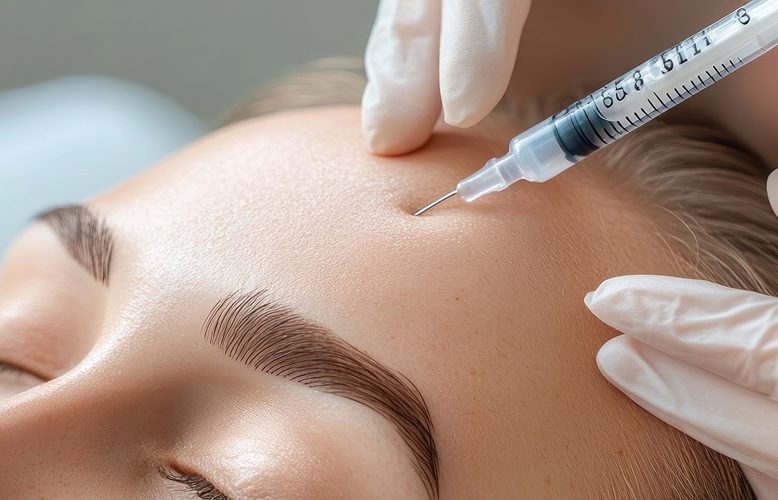
Used to relax muscles that are creating dynamic lines or pulling features in directions that disrupt proportion. In harmonization, botox is not applied reactively ("you have forehead lines, treat the forehead") but strategically, sometimes relaxing a muscle in one area changes the visual balance of another.
- Forehead botox, softens horizontal lines while preserving eyebrow lift and natural expression
- Between-brows botox, the glabella "11s"; one of the highest-impact single treatments in harmonization
- Crow's feet botox, smooths the orbital zone without affecting the natural animation of a smile
2. Hyaluronic acid fillers
Used to restore or redistribute volume, define contours, and correct structural imbalances. Filler in harmonization is almost always placed in multiple zones, because volume in one area affects the visual weight of everything around it.
- Cheek filler, restores midface volume, which reduces the appearance of nasolabial folds and under-eye hollowing without touching either area directly
- Lip filler, adjusted to the lip-to-chin ratio established in the facial map, not to a standard volume
- Chin and jawline filler, defines the lower third, which often has more visual impact on perceived facial balance than any upper-face treatment
- Under-eye (tear trough) filler, addresses hollowing that reads as fatigue and disrupts the visual continuity of the midface
- Liquid rhinoplasty, non-surgical nose reshaping that can dramatically change perceived facial proportion without any surgery
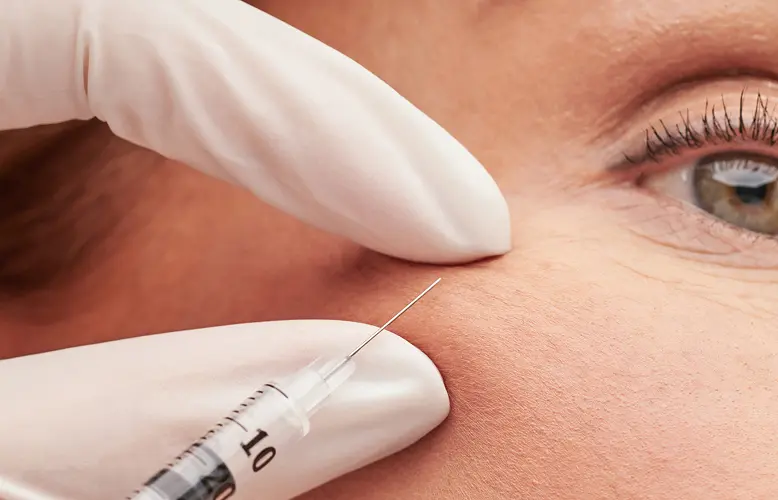
3. Biostimulators
Products such as Sculptra (PLLA), Radiesse (CaHA), or Ellansé (PCL) that stimulate the skin's own collagen and elastin production over time. In harmonization, biostimulators address the background, overall skin quality, laxity, and volume loss, that makes other treatments more effective and longer-lasting. They are particularly relevant for patients over 35 whose facial map shows early structural volume loss.
4. Skin boosters
Ultra-hydrating hyaluronic acid preparations injected superficially to improve skin texture, radiance, and elasticity. Skin boosters are the surface layer of harmonization, they don't change structure or volume, but they change the quality of the skin that carries everything else. A well-hydrated, luminous skin makes every other result look more natural.
Facial harmonization is not a list of treatments. It is a diagnosis of the relationships between the parts of your face.
Harmonization is not excess, it is proportion
One of the most persistent misconceptions about facial harmonization is that it means doing a lot of treatments at once, or that it produces dramatic change. Neither is true when it is done correctly.
The goal of harmonization is proportion, not transformation. A well-designed plan often involves small interventions, sometimes a single milliliter of filler distributed across two zones, combined with targeted botox in one area, that together create a result the patient couldn't have achieved by treating either zone alone. The change feels significant because balance has been restored, not because volume has been added.
At Cosmo Clinic, our editorial approach to harmonization means we actively talk patients out of more when more isn't the answer. More filler in the lips when the real imbalance is in the chin projection. More botox on the forehead when the heaviness comes from the brow, not the lines above it. The treatment that fixes the right thing, in the right proportion, is the one that produces a result patients keep coming back to.
The first consultation: your facial map
Every harmonization plan at Cosmo Clinic begins with a consultation that takes 30–45 minutes. No treatment is performed in this session. The session is entirely diagnostic.
We assess your face in movement, how muscles engage when you smile, frown, raise your eyebrows, and speak. We take reference photographs. We evaluate facial thirds, the projection relationships between nose, lips, and chin, the symmetry and volume distribution of the midface, and the dynamic vs. static nature of any lines present.
From that assessment we build your facial map: a record of what exists, what the proportional imbalances are, and what treatments are most likely to address them. The plan we present at the end of the consultation is specific to your anatomy, not a menu of options, but a considered recommendation with the rationale for each element.
You are never obliged to proceed with anything. If after seeing the plan you want to start with one element and add others later, that is a completely valid approach. Harmonization is not a single event, it is a process that can be built incrementally.
What results to expect, and when
Because harmonization typically involves more than one treatment, results unfold on different timelines. Here is what to expect:
- Day 0 (treatment day): filler volume is immediately visible. Mild swelling is normal and expected, this is not the final result. Botox has no visible effect yet.
- Days 3–7: botox begins to relax the treated muscles. Swelling from filler recedes. The face starts to show what the plan will produce.
- Day 14: all acute effects have resolved. This is when we schedule the review appointment, every harmonization patient is seen at day 14 to assess whether any minor adjustment is needed. That follow-up is always included, at no additional cost.
- Months 1–6: if biostimulators were included, collagen production is building. Skin quality, texture, and firmness continue to improve progressively.
Longevity varies by treatment: botox typically lasts 3–4 months, hyaluronic acid fillers 9–18 months depending on area and mobility, biostimulators up to 24 months. A maintenance plan is designed to keep all elements consistent, which generally means staggered visits rather than a single annual session.
Is facial harmonization right for you?
Harmonization is most valuable for patients who:
- Feel something is "off" about their face but can't identify what, the facial map often makes this immediately clear
- Have had single treatments before without being fully satisfied with the result
- Want natural results and are concerned about looking "done", the proportion-first approach naturally resists excess
- Are considering their first aesthetic treatment and want a comprehensive assessment before deciding where to start
- Are in their 30s or older and are noticing that the face is changing in multiple ways simultaneously
Harmonization is not the right approach for patients who want a single specific change and have no interest in evaluating the broader picture. A patient who wants only lip filler, has no other concerns, and is happy with every other aspect of their face does not need a harmonization consultation, they need a good lip filler doctor. We offer both. The distinction matters.
If you are unsure which category you fall into, the initial consultation is free. We will tell you honestly which approach is appropriate.