
Botulinum toxin · 3 min read
How long does botulinum toxin last? Three to six months, depending on you
It is the question everyone asks before a first treatment. The answer has numbers by area, a day-by-day calendar, and three or four things that make the effect last longer or shorter in your case.

Botulinum toxin is not permanent, and that is what makes it reversible. The effect lasts between 3 and 6 months depending on the area, the dose and the person. Here are the numbers we work with for botulinum toxin treatments at Cosmo Clinic, and what you can do to make the effect last.
Duration by area
Every muscle has its own size, its own rhythm of use and its own blood supply. That decides how long the toxin works before the body breaks it down.
| Area | Usual duration | Usual interval |
|---|---|---|
| Forehead | 3–4 months | 3–4 months |
| Frown lines (11s) | 3–5 months | 3–4 months |
| Crow's feet | 3–4 months | 3–4 months |
| Bunny lines (nose) | 3–4 months | 3–4 months |
| Gummy smile | 4–6 months | 4–5 months |
| Chin | 3–5 months | 4 months |
| Nose tip | 4–6 months | 4–5 months |
| Lip flip | 2–3 months | 2–3 months |
The lip flip lasts the least, 2 to 3 months, because the muscles around the mouth never stop: talking, eating, smiling. The gummy smile and the nose tip last the longest, because those muscles do little work.
The calendar, day by day
The toxin does not act on the spot. There is a wait that worries people who have not been through it.
- Days 1 to 3. Nothing visible. Normal. The toxin is binding to the nerve endings.
- Days 3 to 5. It starts. Lines soften. The muscle may feel slightly held.
- Days 7 to 14. Full effect. This is when the result is assessed and a touch-up decided, if needed.
- Months 1 to 3. The result holds. The expression stays, with less force behind it.
- Months 3 to 4. The muscle starts to recover, slowly. Lines come back bit by bit.
- Months 4 to 6. The face returns to where it started. Time to book the next session.
The toxin never ends overnight. The muscle recovers over weeks. That is a safety feature, not a failure.
What makes it wear off faster
Some of this you control, some you don't.
Metabolism is the big one. Very active people break the toxin down faster. Not a health problem, just biology. Hard exercise in the first weeks speeds up the same process. So do smoking and too much sun.
Dose matters. A dose that is short for the muscle is one of the most common reasons an effect fades early. At Cosmo Clinic the dose is set per area and per muscle, and reviewed at two to three weeks.
And some areas simply use more: the lip flip, crow's feet, and the forehead in very expressive people.
What makes it last longer
Treating regularly. A muscle treated several times becomes less active and responds to smaller doses. Technique too: placing the toxin in the right muscle, at the right depth, at the right points, gets more out of each unit. And daily sunscreen protects the skin and the result.
How often to repeat
The goal is not to repeat when the effect is gone. It is to repeat before the dynamic line, the one that shows with expression, fixes into a static one, the one that stays at rest.
At Cosmo Clinic the rule is simple. In the first year, 3 to 4 months apart. In years two and three, 4 to 5, depending on how the muscle responds. After that, many people space out to 5 or 6.
There is no dependency. If you stop, the face goes back to how it was, bit by bit. It does not get worse.
Why every person is different
Two people with the same area, the same dose and the same team can get different durations. The toxin is a protein, and every body breaks it down at its own pace.
After two or three treatments the clinical team knows your pattern and sets the dose and the gap to fit it. From then on the effect becomes predictable.
Frequently asked questions
Short answers to the questions we hear every day. Everything else belongs in the consultation.
How long does it last in the forehead?
Three to 4 months. A little less the first time. With regular treatments the muscle responds better and the gap usually reaches 4 or 5 months.
And for crow's feet?
Also 3 to 4 months. The eyes move a lot, and movement uses up the effect faster.
Does it last longer over time?
For most people, yes. Someone who starts on 3-month sessions often moves to 4 or 5 after two or three years.
What makes it wear off faster?
A fast metabolism, frequent hard exercise, a lot of sun, smoking, a dose that is short for the muscle, and high-movement areas like the lips.
How long does it take to work?
The first change shows at 3 to 5 days. The full effect is there at 7 to 14 days. Seeing nothing in the first two days is normal.
When should I repeat it?
When the lines start coming back, usually between 3 and 6 months. If you don't repeat, the muscle recovers slowly and the face returns to how it was. It does not get worse.
Related treatments
 Botulinum toxin · Forehead
Forehead botulinum toxin
Softens the horizontal forehead lines. Visible in 3 to 14 days.
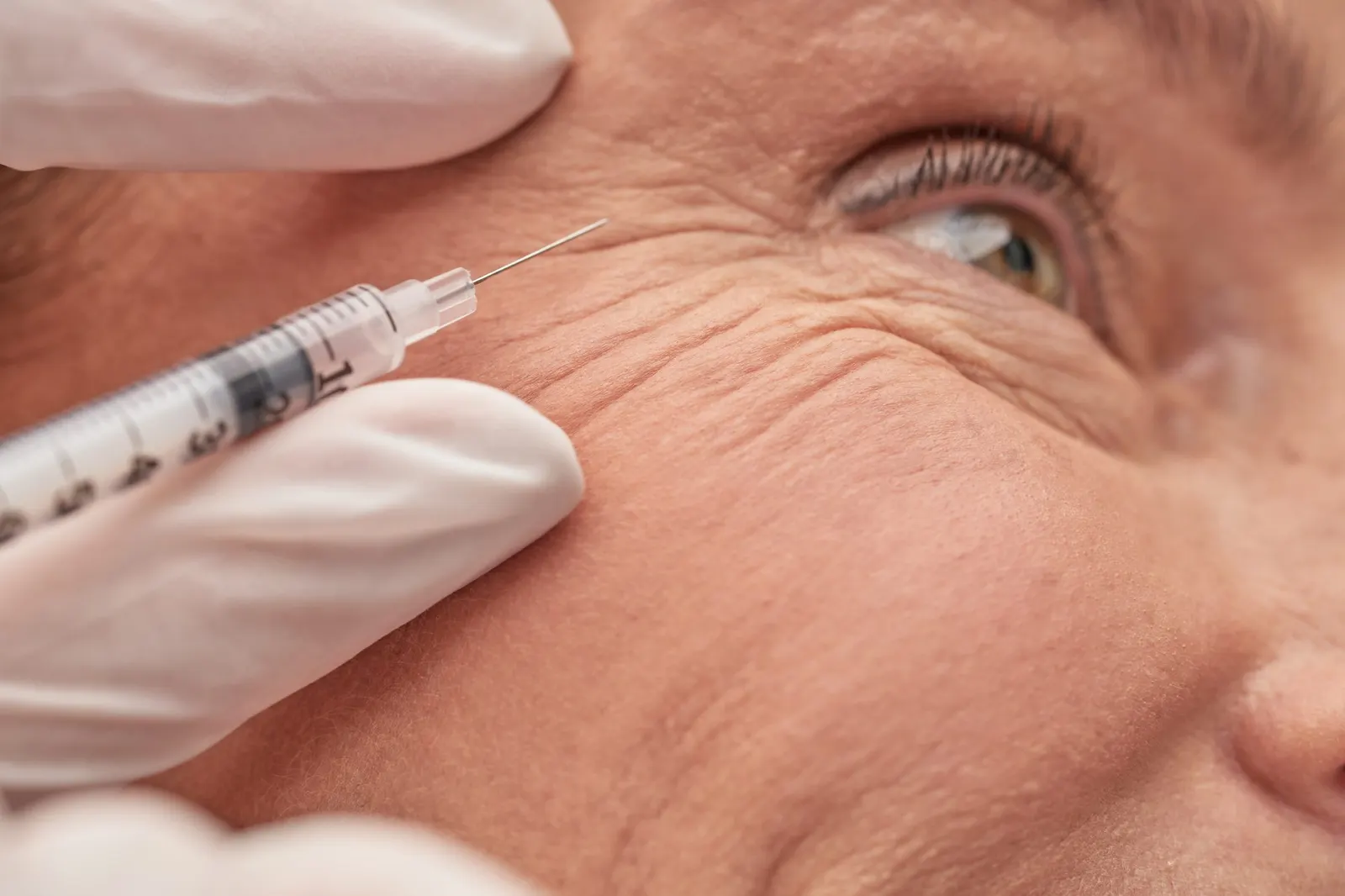 Botulinum toxin · Crow's feet
Botulinum toxin for crow's feet
Softens the lines beside the eyes without taking the smile.
 Botulinum toxin · Bunny lines
Bunny lines botulinum toxin
Softens the small lines on the sides of the nose.
Keep reading
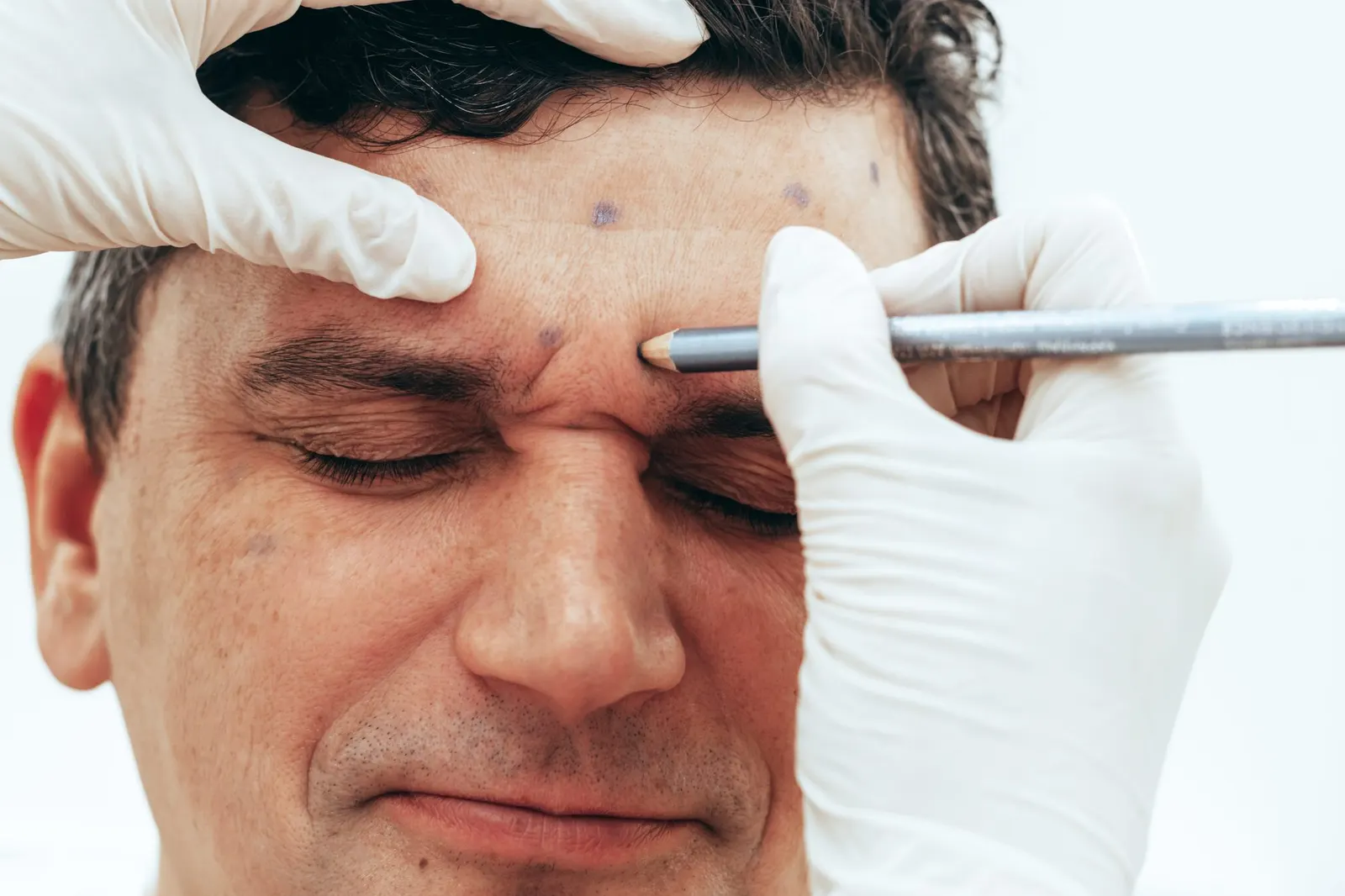 Clinical guide
Botulinum toxin: the complete guide
How it works, which areas, what to expect, how long it lasts, risks and aftercare. Everything the clinical team at Cosmo Clinic assesses before any treatment.
 Botulinum toxin
Botulinum toxin aftercare: the first 24 hours
Almost every question comes after the treatment. Can you go to the gym? Lie down? Have a glass of wine at dinner? Wash your face? The answers, with the reason behind each one.
 Clinical guide
Botulinum toxin: what can go wrong, and what cannot
Anyone considering botulinum toxin deserves numbers, not alarm and not reassurance. The common effects and how long they last, the rare complications and how they happen, who should not have it, and what changes with who injects.
Book a consultation
Start with a conversation.
Leave your name and number. We call or reply on WhatsApp, in English or Portuguese.
- Assessment consultation free of charge
- Prices published for every treatment
- No commitment